The NEVI Industrie Event 2026 was in full swing yesterday, buzzing with insights, connections, and meaningful exchanges. Sourcing Champions was proud to sponsor the event and to have the opportunity to host both a booth and a workshop on-site. Here’s our recap of the day.
Insightful Keynotes
In the plenary hall, the session opened with an inspiring talk from Bas Vos and Lizan Molmans of Nevi. One concept from Bas stood out: “Eisenbahnscheinbewegung,” a German term describing the illusion of movement you get when a vehicle beside you pulls away while you stand still, a fitting metaphor for illusory progress on trends like AI, where teams can convince themselves they’re advancing when they’re really standing in place. It’s a useful check on where you truly stand on innovation.
Ton Geurt then took the stage to discuss the shifting landscape of industrial supply chains. He touched on the geopolitical pressures reshaping the global order, the growing demand for transparency across value chains, the accelerating push toward digitalization and AI, and the need for genuine partnership and stronger team cohesion in this uncertain climate.
Another memorable keynote was from Robert Driessen, CEO of WTP Buynamics, our partner in cost modeling. He took the stage with an energetic and, above all, pragmatic keynote on moving cost management beyond traditional savings.
The Resilience Roulette: Risk Management with Scenario Planning
Our strategy consultant, Jenny Nguyen, delivered a hands-on workshop on risk management through scenario planning lens. This set up fit both the event’s theme of grip on cost and resilience, and the current disruptive state of the world.
Jenny opened with a bold proposition: as chaotic as today’s world may seem, from the Strait of Hormuz crisis to sharp spikes in energy prices, these disruptions are not entirely unforeseeable. History shows us that disruptions follow repeated patterns, and we’ve seen this play out over the past few decades. The recent surge in energy prices, for instance, mirrors the rise in semiconductor and medical supply prices during the COVID-19 era, and similar patterns emerged even earlier, in the 1970s.
The takeaway is, rather than reacting to each new “shock,” we can anticipate likely scenarios and prepare for them in advance, and that’s exactly what the workshop set out to do.
Participants stepped into the shoes of procurement specialists at Deltarand Co., a fictional Dutch car tire company operating with 10 suppliers across 5 materials. Their goal: prepare for disruptive risks bound to happen, in a way that makes the best use of resources while protecting the most value for the company.
Two factors had to be weighed: the probability of a risk scenario, and how much impact it would have on the company. Probability is assessed by gathering information from current news, reports, and historical evidence, reflected in the “risk roulette” we created for the workshop. Some risks are simply more likely than others; an energy crisis triggered by conflict in the Middle East, for example, is far more probable than China imposing an out-of-the-blue embargo.
Impact, on the other hand, comes down to understanding what you procure: what’s strategic versus non-strategic, what’s truly critical, how long and complex your supply chains are, and how you should act from a total cost perspective. This is where participants had to make their own calls, on the spot.
Once the risk analysis was done, participants used an app to build their mitigation plans. Mirroring real-world constraints, they worked with a token system. Tokens represent the resources, manpower, and budget needed to commit to a mitigation action, all in limited supply. Participants had to balance priorities and accept risk in some areas to build the strongest possible plan within those limits.
Once the plans were set, it was time to spin the roulette and see which risk hit. Participants then walked away with three core realities about risk management in procurement, along with the actions each one calls for:
- Reality #1: We can’t predict disruption, but we can prepare for it, which starts with knowing your critical suppliers, dependencies, and exposure.
- Reality #2: Creating resilience should be part of procurement’s values, not an afterthought, meaning resilience, continuity, and long-term value need a seat at the table in every sourcing decision.
- Reality #3: We can’t eliminate every risk; we need to choose which ones to take, which is why defining your organization’s risk appetite clearly is essential.
Closing Thoughts
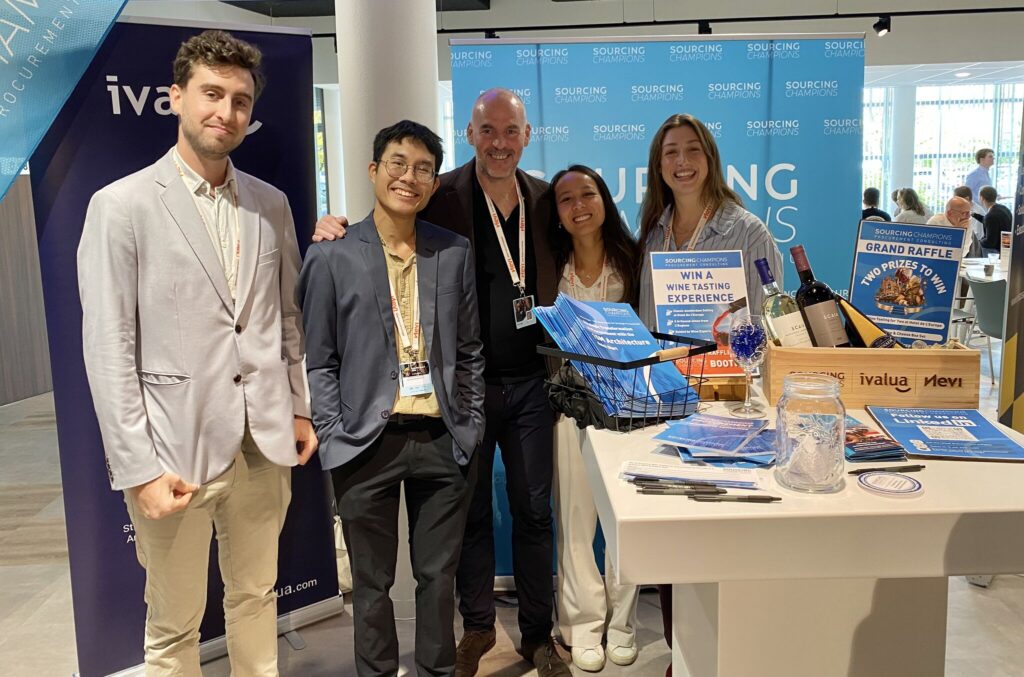
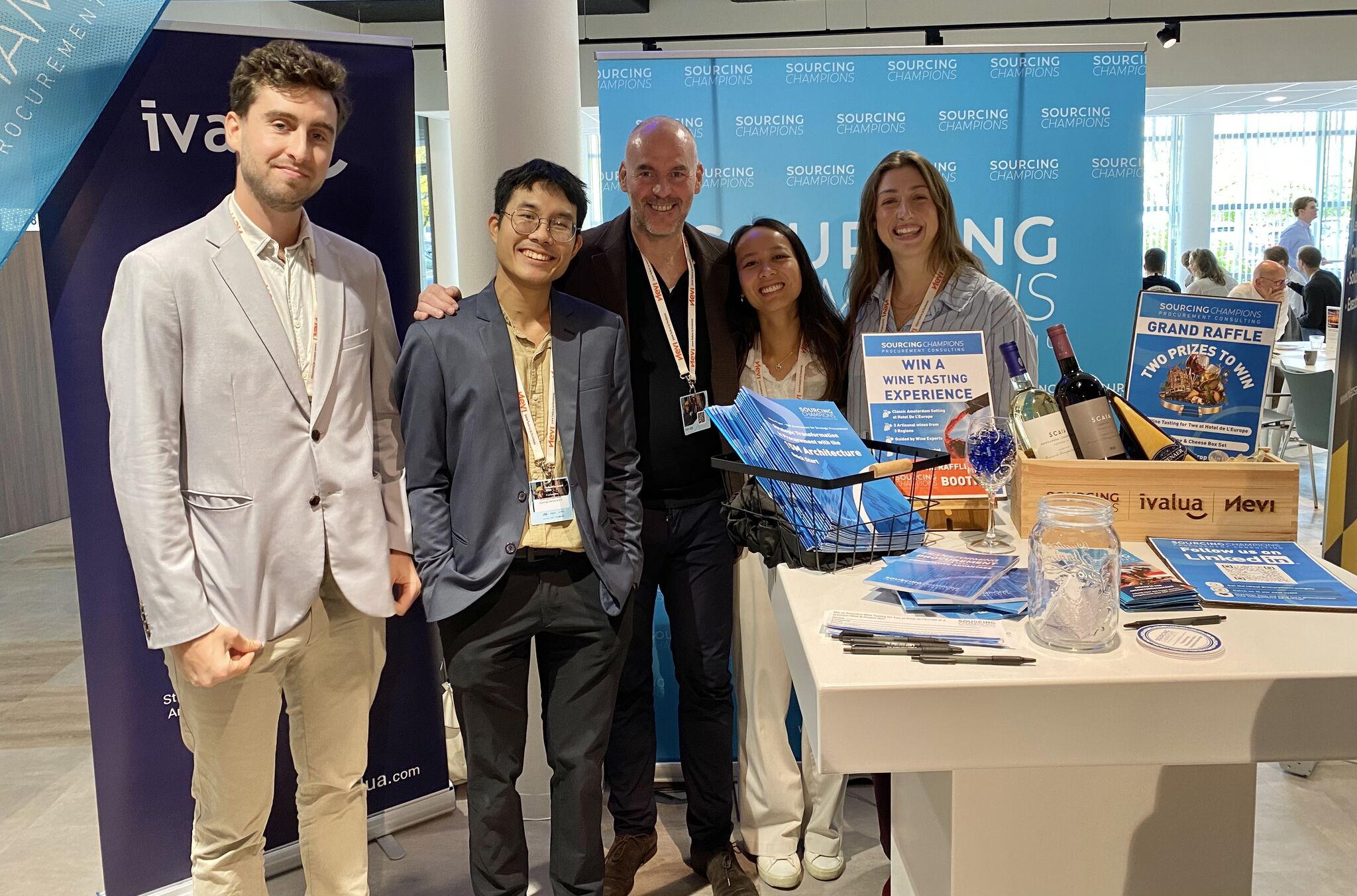
Sourcing Champions would like to extend our thanks to the Nevi team for organizing this event. Thank you also to everyone who participated in our workshop, we hope you walked away with valuable insights. And lastly, to everyone who stopped by our booth for a conversation, which included a raffle for a wine tasting experience and an exclusive box set.
We join events like these both as a Nevi partner and as strong believers in procurement as a competitive advantage, especially in today’s challenging environment.
Sourcing Champions is committed to helping organizations create value through procurement, and we look forward to many more conversations like these in the future.