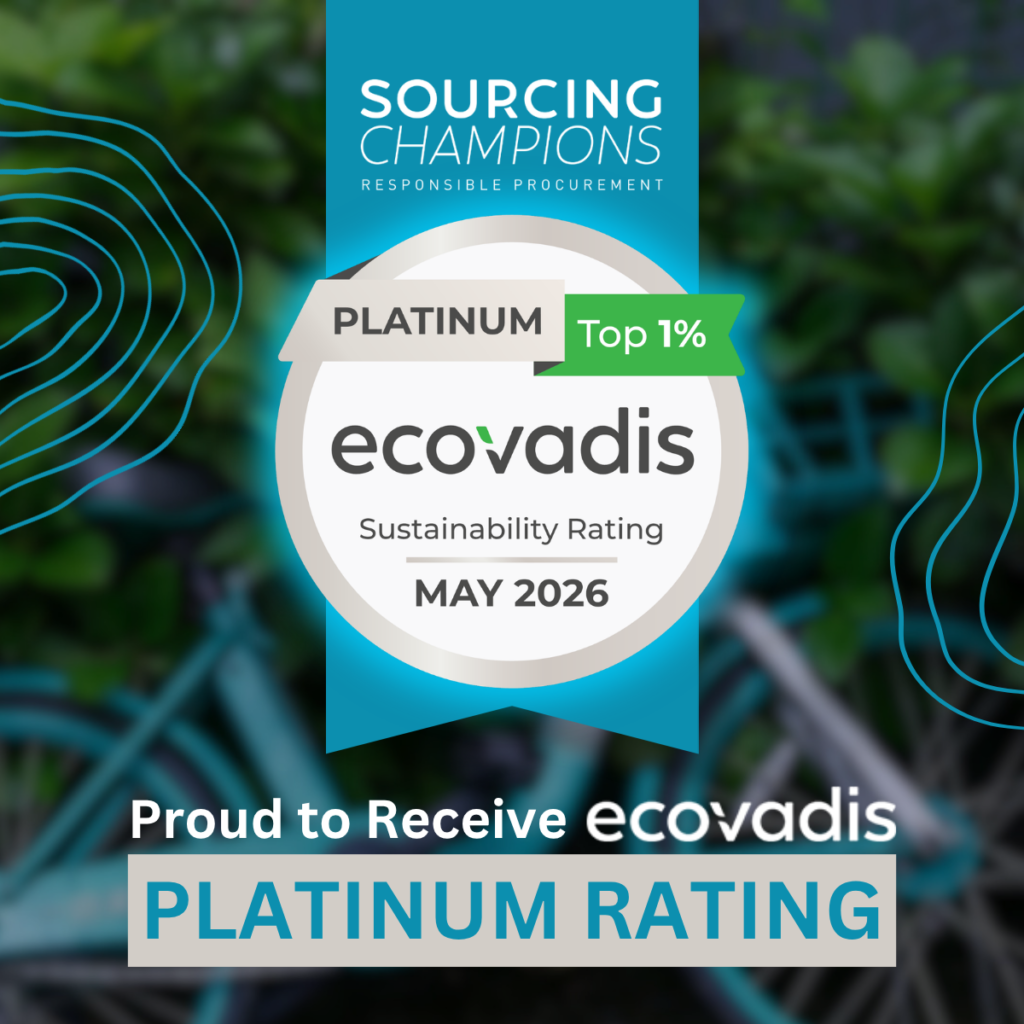
Within just one year, Sourcing Champions made a remarkable leap from an EcoVadis Bronze rating to Platinum status. This places us among the top 1% of companies worldwide for sustainability performance.
Our commitment to sustainability is reflected in our exceptional performance across all three applicable EcoVadis pillars: Environment, Labour & Human Rights, and Ethics, where we scored above 90 in each category. These results contributed to an outstanding overall score of 93 out of 100.
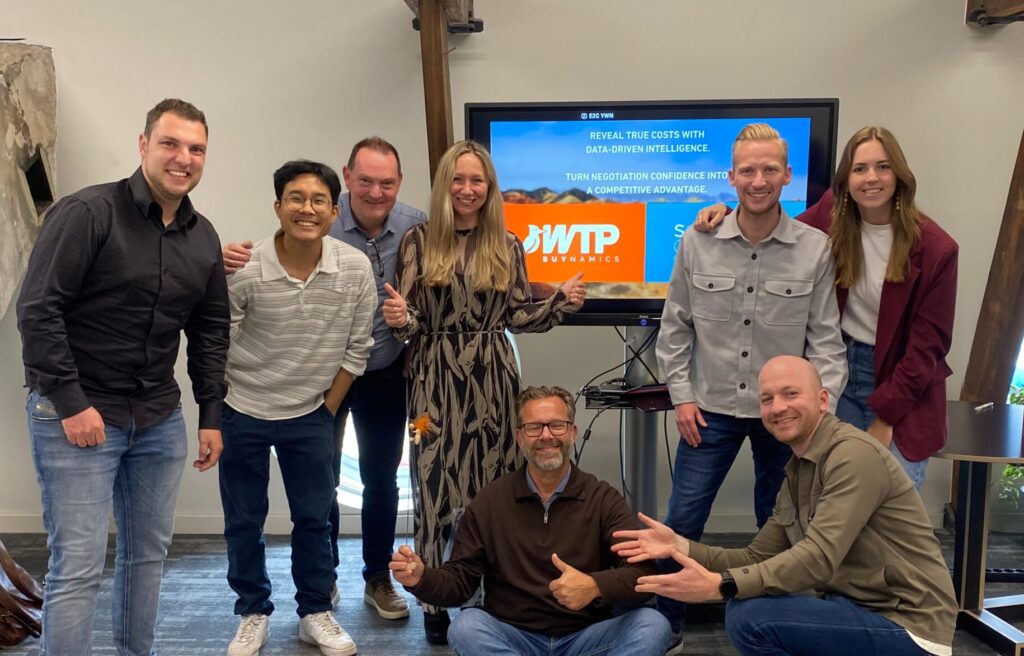
We spoke with Rahul Rao and Bheemapos Seemawut, who led the EcoVadis assessment project for Sourcing Champions under guidance and leadership from Robert Waalder, Managing Director, and Sabrina Hueren, Senior Manager and Strategy Consultant.
Drawing on lessons learned from previous client projects, they adapted their approach to fit the company’s operating model. Here are the key insights and Sourcing Champions’ approach to the EcoVadis assessment, which we apply both internally and in client projects.
1. Set SMART Goals
“I think that, ultimately, companies should strive to be as responsible as possible,” said Bheemapos, “but it’s equally important to understand where you stand today and consider whether these ambitions should be pursued step by step.”
At the kickoff of the project, we defined our target rating for the year using the SMART goal framework: specific, measurable, attainable, relevant, and time-bound. Being our second year of assessment, we had a clear understanding of our capabilities and the achievable areas for improvement based on last year’s performance.
“We have a clear improvement goal in mind, and EcoVadis ratings have become part of our company-level KPIs, giving us measurable accountability for our efforts,” said Rahul. “This assessment also comes at a time of growth for the company, and we’ve evaluated that achieving a higher rating is realistic given the capabilities of our team. From a project management perspective, it also makes sense, as we’ve defined clear deadlines for each milestone.”
When applying this approach to large organizations with broader procurement scopes, we follow the same framework in our client support. Each EcoVadis assessment project starts with a workshop to evaluate existing measures and policies, helping identify the current baseline and define a scalable path for improvement.
“Every organization has its own level of complexity and unique structure. Context matters just as much as ambition. This is why we always start with a dedicated workshop for our clients”, expanded Rahul.
2. Understand the EcoVadis Structure
“What I often see in projects is that many companies already have sustainability policies and measures in place, which is undeniably a great start,” Rahul shared, drawing on his experience supporting clients with EcoVadis assessments. “The challenge, however, is that they often don’t know how to properly map, target, and measure their efforts.”
EcoVadis has established 21 sustainability criteria based on globally recognized standards. These criteria are structured across EcoVadis’ four main pillars: Environment, Labour & Human Rights, Ethics, and Sustainable Procurement. To drive meaningful progress, organizations need to map their activities against these topics in a way that reflects their specific operations and priorities.
“In the Environment pillar, for example, it is crucial to identify your material topics. For a manufacturing company working with chemicals, waste management looks very different than it does in an office setting. That’s why, during our workshops, we also guide companies through determining what is most relevant for their specific context”, said Rahul.
There are also three core management components in the EcoVadis assessment. Policies assess the scope, formalization, and robustness of a company’s sustainability commitments, objectives, and targets. Measures evaluate the concrete actions taken to implement these commitments in practice. Reporting, in turn, focuses on the quantitative KPIs used to track and demonstrate progress.
“It is important to structure your submission and supporting evidence in a way that aligns with the management pillars,” added Bheemapos. “We make sure that each piece of evidence is clearly attributed to the relevant part of the questionnaire, ensuring full coverage.”
3. Establish Efficient Governance
For a boutique organization like Sourcing Champions, the leadership team collaborates closely across the company, enabling efficient review and supervision processes. This is supported by hands-on involvement from Robert Waalder, Founder and Managing Director, as well as Sabrina Hueren, Senior Manager and sustainability specialist.
In larger organizations, however, the process becomes more complex. We recommend running these projects top-down, ensuring that the corporate sustainability strategy cascades clearly into departmental strategies, supported by a single point of contact at the leadership level. In our support services, we also help organizations establish the right structure, workflows, and reporting systems needed to ensure a successful assessment.
“Cross-functional collaboration is crucial for driving initiatives, as sustainability touches every part of an organization,” said Rahul. “For example, in our clients’ companies, HR plays a key role in human rights topics, Procurement in Scope 3 emissions, and Compliance or Finance in areas such as legal risks and anti-corruption.”
Emphasizing cross-functional collaboration, internal communication becomes essential to ensure alignment, clarity, and accountability across all departments. Clear roles, consistent information flow, and regular updates help teams stay coordinated and ensure that sustainability initiatives are understood, supported, and effectively implemented throughout the organization.
4. Commit to Training and Awareness Building
The EcoVadis assessment goes beyond a score. It must translate into real behavioral and operational change. This means that, its real value lies in increasing awareness and embedding a shift in mindset. That’s why internal training plays a critical role as a key measures indicator, ensuring that relevant topics are understood and embedded across the business.
“As part of our commitment to Procurement with Purpose, we’ve delivered trainings on key areas such as regulations, supplier engagement, and sustainability for our clients’ procurement functions as part of the support project,” said Rahul. “Within Sourcing Champions, we also ensure that all core topics, environment, labour and human rights, and ethics, are consistently covered across the team.”
5. Benchmark to International Standards
As an internationally recognized assessment system, EcoVadis encourages organizations to base their sustainability policies on global standards such as the UN Global Compact (UNGC) Ten Principles, ILO conventions, ISO 26000, ISO 14001, OECD Guidelines, and ISO 20400. We kept this in mind when defining our policies, not only to meet assessment requirements, but to genuinely evolve into a global champion of sustainability.
“We explicitly reference these standards in our policies and ensure strong alignment with them,” said Bheemapos. “Beyond that, we translate these principles into concrete measures and KPIs to demonstrate our commitment in practice. This best practice is also applied in our client projects.”
6. Engage with your suppliers
From an environmental perspective alone, upstream Scope 3 emissions typically account for 50% to 95% of a company’s total carbon footprint. At the same time, organizations with global supply chains must ensure that suppliers, regardless of location, operate in line with international standards and meet consistent sustainability expectations.
Learn more about our decarbonization and scope 3 management services
When addressing responsible procurement pillar, supplier engagement plays a critical role. We have witnessed this in many of our client projects across multiple industries, from manufacturing to FMCG. By embedding sustainability into supplier relationships, organizations can drive transparency, manage risks more effectively, and ensure that their procurement activities align with broader ESG objectives.
“It’s essential to not only define internal policies, but also extend expectations, standards, and practices to suppliers,” said Rahul. “For our clients, we review ESG clauses in supplier contracts, assess due diligence and supplier selection processes, and ensure that sustainability criteria are fully integrated into RFPs.”
7. Adopt Creativity
“While becoming more responsible is a broad topic that requires significant effort, I also believe that small, everyday actions can make a real difference, and that’s where creativity comes in,” said Bheemapos. “I often ask myself: how can we break down big concepts like sustainability or human rights into smaller, practical initiatives that our team can easily take on?”
With this mindset, the Sourcing Champions team has implemented a range of initiatives. For example, to promote workplace wellbeing, we introduced a healthy snack system with fresh fruit. On the environmental side, we encourage paper reuse and track our paper usage in a gamified way. To support diversity and inclusion, we participate in Pride events to show support for the LGBTQ community and organize activities to learn about different cultures, such as celebrating Thai New Year. These initiatives are also submitted as part of our measurable actions.
“This works in two ways,” Bheemapos added. “It helps our team actively contribute to a more responsible way of working through everyday actions, which I believe is very powerful, as everyone plays a part. At the same time, it demonstrates our commitment in a very tangible and visible way.”
Conclusion
From setting realistic, measurable goals to building strong governance, aligning with international standards, and engaging both employees and suppliers, the journey highlights one key takeaway: success in EcoVadis requires the right strategy, the right structure, and the right mindset.
At Sourcing Champions, we apply these same principles not only internally but across all our client engagements. Whether supporting organizations at the start of their sustainability journey or helping them move from Bronze to Gold or Platinum, we tailor our approach to each company’s size, complexity, and ambition.